


Cebu emerges as a growing aviation training hub as global industry faces massive workforce demand
CEBU CITY — Despite geopolitical tensions, rising fuel prices and economic uncertainties confronting the aviation industry, the sector’s long-term fundamentals remain strong, with 2.7 million new aviation professionals expected to be needed worldwide over the next 20 years.
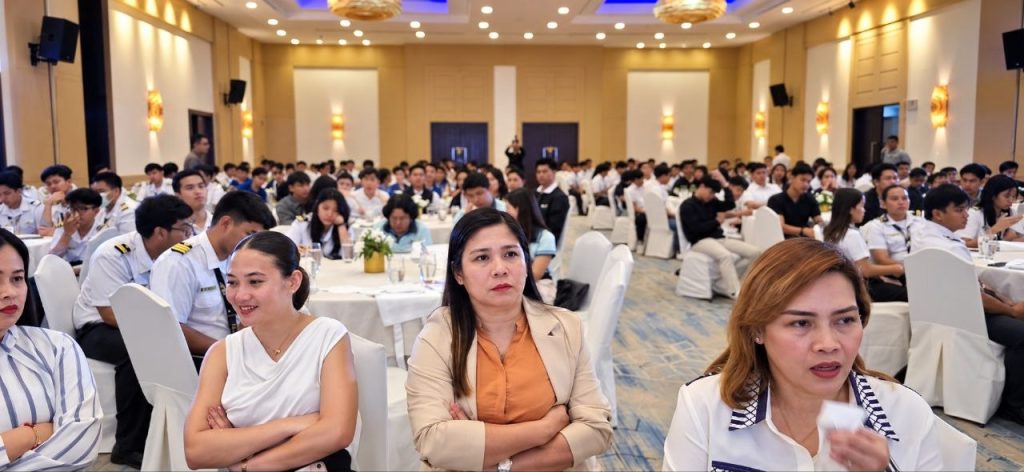
This was the message delivered by Vincent Charles T. Ong, president of Airworks Aviation Academy, during the 4th Cebu Aviation Summit 2026 held Friday, September 25, at the City Sports Club Cebu, where more than a hundred aviation students from across the Visayas gathered to learn about the industry’s opportunities and challenges.

Ong cited Boeing’s latest 20-year aviation workforce outlook, which projects a global requirement for approximately 2.7 million aviation professionals over the next two decades.
The projected workforce demand includes about:
• 660,000 pilots
• 710,000 technicians
• 1 million cabin crew
For Southeast Asia alone, the projected requirement is approximately 243,000 aviation professionals over the same period.
“We cannot pretend that aviation has not faced challenges this year. Geopolitical tensions have created uncertainty, while fuel prices and inflation have increased pressure on the industry. But if you look beyond the headlines, the fundamentals of aviation remain really strong,” Ong said.
‘Just look at the numbers’
Ong urged aviation students to look beyond the industry’s current challenges and focus on the long-term opportunities being created by the continuing expansion of air travel.
“Just look at the numbers,” he said, pointing to the projected demand for pilots, aircraft technicians, cabin crew and other aviation professionals.
The industry’s expansion is being driven by the growth of airlines, the opening of new routes, the delivery of new aircraft and increasing passenger demand—all of which create employment opportunities extending well beyond the cockpit.
For the Philippines, the outlook presents a significant opportunity as international airlines increasingly look to the country for aviation talent.
Filipino aviation professionals continue to attract international interest because of their training, English proficiency, discipline and service-oriented culture.
Cebu’s growing aviation role
The summit also highlighted Cebu’s increasing importance in the regional aviation landscape.
With more international airlines operating from Mactan-Cebu International Airport, additional destinations being connected to the province and continuing investments in aviation training, Cebu is gradually strengthening its position not only as a tourism destination but also as a potential regional aviation training hub.
Ong noted that every new airline, route and aircraft entering the market generates employment opportunities across the aviation ecosystem—from pilots and flight instructors to aircraft engineers, technicians, cabin crew, airport personnel and other support professionals.
The presence of major airline training initiatives in Cebu further demonstrates the province’s growing role in developing aviation talent.
Cebu Pacific, for instance, operates its Cadet Pilot Program out of Cebu, while Vietjet’s decision to entrust Airworks with its Cadet Pilot Program reflects growing confidence in the capacity of Cebu-based aviation training institutions.
Training for a regional workforce
The aviation education landscape is also evolving.
Instead of preparing Filipino students solely for employment in domestic airlines, aviation schools are increasingly positioning their graduates for opportunities across Southeast Asia and the wider international aviation market.
This shift could give Cebu’s aviation students access to a much broader career pipeline as airlines across the region face the need to recruit and train hundreds of thousands of new professionals.
‘Dream big and prepare big’

The summit also featured speakers from different sectors of the aviation industry, including Hermione Abadia, founder and managing director of RWY 22 Cabin Crew Training; Engr. Ramon Von Possel Jr., head of training of Aviation Plus Philippines; Capt. Samuel Avila II, vice president for flight operations of Cebu Pacific Air; Gov. Pamela S. Baricuatro of the Province of Cebu; Philip Fajatin, head of airport operations of Mactan-Cebu International Airport; and ILT Kim Kenric Gabriel O. Agatep, Philippine Air Force pilot and safety officer.
Abadia reminded aspiring aviation professionals that reaching the industry requires more than simply having a dream.
“Your runway is not your destination. Don’t compete. Dream with preparation. Dream big and prepare big.”
Her message underscored the importance of discipline, preparation and continuous learning as students pursue careers in one of the world’s most highly regulated and competitive industries.
A runway of opportunity
For the students who attended the summit, the figures presented offered a broader perspective on their career choices.
The projected 2.7-million global workforce requirement signals that aviation’s future will not be limited to pilots alone. Technicians, cabin crew, engineers, flight operations personnel, safety specialists, airport professionals and other aviation support workers will all play critical roles in keeping the expanding global air transport system moving.
For Cebu, the challenge now is to ensure that its aviation schools, industry partners and institutions can prepare enough qualified professionals to meet that demand.
As the industry looks toward the next two decades, the message from the Cebu Aviation Summit was clear: the aviation industry may face turbulence, but its long-term demand for skilled people remains substantial.

comments are temporarily disabled.